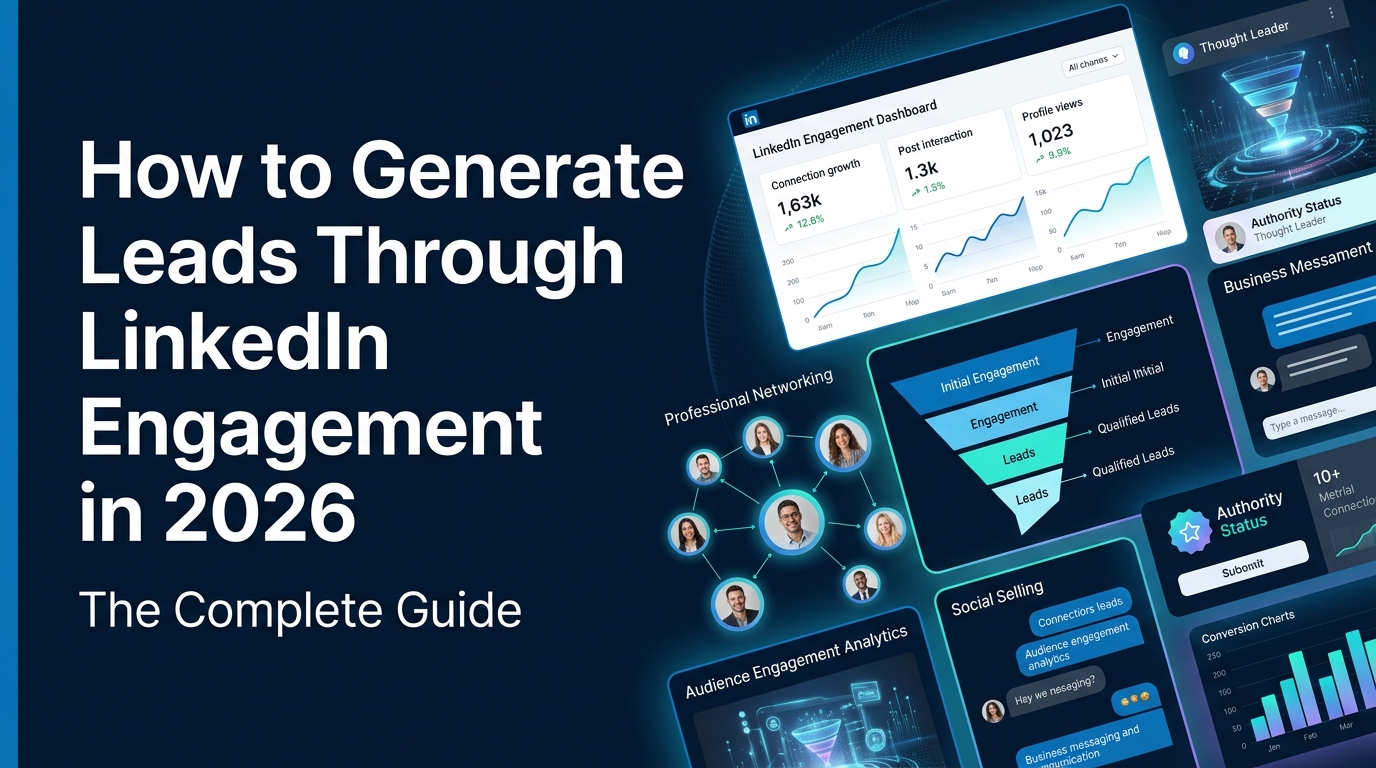
Generate Leads Through LinkedIn Engagement in 2026


If you are shopping for an AI chatbot you can train on your own website, docs, or knowledge base, Chatbase and SiteGPT are almost certainly both on your shortlist. They solve roughly the same problem: paste a URL or upload your content, get an AI agent that answers questions in your brand's voice. Still, they make very different bets on pricing, integrations, the action layer, and who they are actually built for.
We have tested both in real production environments this year. This is an honest, head-to-head comparison covering pricing at real usage tiers, features, integrations, onboarding speed, and the specific scenarios where each tool wins. Where it is a close call, we will say so. Where one is clearly better for a specific job, we will say that too.
Chatbase or SiteGPT?
Pick Chatbase if you want the more polished, more deeply integrated platform, you are targeting customer service automation specifically, and you have the budget for the Standard or Pro tier. It is the safer, more mature choice for mid-market support teams that need multi-channel reach and a real action layer.
Pick SiteGPT if you want lower entry pricing, faster onboarding, lead generation built in from day one, and you do not need deep action-taking capabilities. It is the better choice for indie founders, small businesses, and agencies that need to spin up bots quickly without a steep learning curve.
If neither pricing model fits your volume — or you need a tool built specifically around generating and optimizing LLM-ready content rather than just answering questions — there is a third option worth considering that we will cover at the end.
Quick Comparison Table
Chatbase | SiteGPT | |
Positioning | AI customer service platform | ChatGPT for your product |
Free plan | Yes (50 credits/month) | No — 7-day free trial only |
Entry pricing | $32/mo (Hobby, annual) | $39/mo (Starter) |
Mid tier | $120/mo (Standard) | $79/mo (Growth) |
Top tier (non-enterprise) | $400/mo (Pro) | $259/mo (Scale) |
Annual discount | 20% off | 40% off |
Languages supported | 80+ | 95+ |
Action layer | Strong (8 enabled actions on Standard) | Limited |
Integrations | Slack, Stripe, Cal.com, Zapier, WhatsApp, Messenger | Slack, Zapier, Webflow, Shopify, WordPress |
Lead capture | Yes | Yes (built-in, more prominent) |
Voice support | No | No |
White-label | Enterprise only | Pro+ tier |
Best for | Mid-market support teams | SMBs, indie founders, agencies |
Where Chatbase Actually Shines
1. Integrations That Real Teams Actually Use
Chatbase has invested heavily in a broad integration marketplace. Slack handoff for live agents, Stripe for billing lookups, Cal.com for direct booking, WhatsApp and Messenger for multi-channel deployment — these are the integrations that enterprise and mid-market support teams actually need in their daily workflows.
SiteGPT has a smaller integration set, weighted more toward the website builder side — Webflow, Shopify, WordPress. If your stack includes WhatsApp, Messenger, Stripe, or Cal.com, Chatbase saves you weeks of glue code and custom workarounds.
2. The Action Layer Is Genuinely Deeper
This is the difference that separates basic AI chatbot builders from genuine AI customer service platforms. A bot that only answers questions is a glorified FAQ search engine. A bot that takes action can look up order status in your e-commerce backend, create a Zendesk or Freshdesk ticket without human intervention, book a calendar slot directly in Cal.com, process a refund via Stripe, update a HubSpot contact when a lead converts, and hand off to a human agent in Slack with full conversation context.
On Chatbase Standard at $120 per month, you get eight enabled AI Actions out of the box. On Pro at $400 per month, that number climbs significantly. SiteGPT supports actions via Zapier and custom API calls, but the action layer is not the centerpiece of the product. If you need the bot to genuinely reduce your support team's workload rather than just deflect simple questions, Chatbase is the more mature option.
3. Brand Maturity for Stakeholder Buy-In
Chatbase carries the weight of being trusted by over 10,000 businesses, with recognizable enterprise logos on the homepage. If you are proposing an AI chatbot to skeptical stakeholders, a compliance team, or a board, that brand maturity translates into real political cover internally.
SiteGPT has earned credibility — it was Product Hunt's number one product of the day and has solid logos from growth-stage companies — but it is a smaller brand to defend in enterprise procurement conversations.
4. Polish and UX for Non-Technical Operators
The Chatbase admin interface is the most polished in its category. Customer service managers and marketing teams without dedicated engineering support can run it day-to-day without needing developer help for routine configuration changes. This operational independence matters significantly for teams at scale.
Where SiteGPT Actually Shines
1. Lower Entry Cost and More Generous Scaling
SiteGPT Starter comes in at $39 per month and the Growth tier at $79 per month. Chatbase's equivalent mid-tier sits at $120 per month. If you are handling under 10,000 messages per month — which covers most SMBs and early-stage SaaS products — SiteGPT is meaningfully cheaper without sacrificing the core functionality most teams actually need.
2. The Annual Discount Is Dramatically Bigger
SiteGPT offers 40% off for annual billing. Chatbase offers 20%. At Growth or Scale tier, the SiteGPT annual discount more than compensates for any feature gap at comparable price points. For budget-conscious buyers doing multi-year planning, this difference compounds into significant savings.
3. Lead Generation Is Built In, Not Bolted On
SiteGPT treats lead generation as a core product feature, not an afterthought. The widget interface is designed around capture from the start — email collection, lead qualification flows, and CRM handoff are baked into the default setup. Chatbase supports lead capture, but approaches it as one feature among many rather than a primary value proposition.
For marketing-led companies, agencies, and businesses where lead generation is the primary ROI driver for the chatbot investment, SiteGPT's native approach reduces setup time and configuration overhead significantly.
4. Faster Initial Setup
Both products will get you a working chatbot in under an hour from a cold start. SiteGPT's onboarding flow is slightly tighter — fewer optional steps between sign-up and your first working test conversation. When you are evaluating multiple tools on a weekend afternoon and trying to decide where to commit your time and money, this friction reduction genuinely matters.
5. Broader Language Support
SiteGPT advertises 95+ languages and actively emphasizes multilingual capability in its product positioning. Chatbase supports 80+ languages. In practice, both handle the major European, Asian, and Latin American languages competently, but SiteGPT leans into non-English markets more explicitly in its product development roadmap.
Real Pricing at Typical Usage Tiers
Both companies lead their marketing with an attractive starting price, but the real cost depends entirely on how many messages your bot handles. Here is the honest math at three realistic usage levels, using annual billing for both.
Low Usage: ~2,000 Messages Per Month
Chatbase | SiteGPT | |
Tier needed | Hobby ($32/mo annual) | Starter (~$23/mo after 40% annual discount) |
Effective monthly cost | ~$32/mo | ~$23/mo |
Winner | — | SiteGPT by ~$10/mo |
Mid Usage: ~10,000 Messages Per Month
Chatbase | SiteGPT | |
Tier needed | Standard ($120/mo + overage likely) | Growth (~$47/mo after 40% discount) |
Effective monthly cost | ~$120/mo + overage | ~$47/mo |
Winner | — | SiteGPT by a wide margin |
High Usage: ~50,000 Messages Per Month
Chatbase | SiteGPT | |
Tier needed | Pro ($400/mo + significant overage) | Scale (~$155/mo after 40% discount) |
Effective monthly cost | ~$400/mo + overage | ~$155/mo |
Winner | — | SiteGPT by 60% or more |
The pricing picture shifts at enterprise volume, where both tools move to custom pricing and Chatbase's deeper integration and action capabilities may justify the premium. At every SMB and mid-market volume tier, however, SiteGPT wins on raw cost — often by a substantial margin.
Setup and Onboarding: Head-to-Head
We timed both onboarding flows starting from a fresh account with no prior configuration.
Chatbase: Approximately 12 minutes to the first working test conversation. Sign up, paste a URL, wait for the crawl (typically three to five minutes for a standard SaaS or business site), and ask a test question. The default widget styling is clean and professional. Embedding the bot takes one JavaScript snippet.
SiteGPT: Approximately 10 minutes to the first working test conversation. Same basic flow, slightly faster because the onboarding wizard is more linear with fewer optional configuration steps before reaching the test environment. The default widget quality is comparable.
Neither onboarding experience is a meaningful differentiator for a single chatbot deployment. SiteGPT pulls slightly ahead when you are evaluating quickly. Chatbase is marginally more efficient when setting up your second or third bot because its multi-bot management interface is more mature.
Integrations: Full Breakdown
Integration | Chatbase | SiteGPT |
Slack (agent handoff) | ✅ Yes | ✅ Yes |
Zapier | ✅ Yes | ✅ Yes |
✅ Yes | ⚠️ Limited | |
Facebook Messenger | ✅ Yes | ❌ No |
Stripe (billing lookups) | ✅ Yes | ❌ No |
Cal.com | ✅ Yes | ❌ No |
Calendly | Via Zapier | Via Zapier |
Webflow | Snippet | Snippet + dedicated integration |
Shopify | Snippet | Snippet + dedicated integration |
WordPress | Snippet | Snippet + plugin |
Notion | Source only | Source only |
Google Drive | Source only | Source only |
Custom API | ✅ Yes | ✅ Yes |
HubSpot | ✅ Yes | Via Zapier |
Zendesk | ✅ Yes | Via Zapier |
If your stack includes WhatsApp, Messenger, llmprogen, Stripe, HubSpot, or Zendesk as primary tools, Chatbase's native integrations save weeks of custom development. If your stack is primarily website builders — Webflow, Shopify, WordPress — SiteGPT's dedicated integrations for those platforms are actually more polished than Chatbase's snippet-only approach.
Action Layer: Can the Bot Actually Do Things?
This is the comparison dimension that matters most in 2026 and the one most buyers underweight when evaluating AI chatbot builders.
Every AI customer service platform now promises to handle routine inquiries automatically. But the meaningful distinction is between bots that answer and bots that act.
Answering means: retrieving information from your knowledge base and presenting it in conversational form. This is table stakes in 2026. Every decent AI chatbot software does this.
Acting means: looking up live order status in your e-commerce database, creating a support ticket in your helpdesk without human intervention, booking a meeting directly in your calendar tool, processing a refund, updating a CRM record, or escalating with full conversation context to a human agent — all autonomously, without requiring your team to step in.
Chatbase has invested significantly in this layer. The AI Actions framework available on the Standard tier gives you eight enabled actions out of the box. The Pro tier expands this substantially. The product team is actively shipping new action capabilities each quarter.
SiteGPT supports actions via Zapier and custom API but treats them as supplementary features rather than core product bets. For primarily Q&A and lead capture use cases, this is not a problem. For businesses hoping the bot will meaningfully reduce support ticket volume and team workload, Chatbase is the more capable option today.
Which Is Better for Specific Use Cases?
For SaaS Customer Support
Chatbase wins. The action layer — ticket creation, account data lookups, billing queries via Stripe — is essential for SaaS support and Chatbase handles it more maturely. The Zendesk and HubSpot integrations also reduce setup complexity for teams already running those platforms.
For E-commerce
SiteGPT is competitive. Both have Shopify support, but SiteGPT's dedicated Shopify integration is more polished. For order lookup and product Q&A without deep action requirements, SiteGPT's cost advantage at typical e-commerce message volumes is significant.
For Lead Generation
SiteGPT wins. Lead capture is built into the core product experience, not added as an afterthought. For marketing agencies and businesses where the chatbot's primary job is capturing and qualifying prospects, SiteGPT's native lead gen tooling saves meaningful setup time.
For Agencies Managing Multiple Clients
SiteGPT wins on price, Chatbase wins on features. SiteGPT's white-label capability at Pro and Scale tiers makes it the more affordable agency option. Chatbase's multi-bot management and deeper integration set make it more capable once client volume and complexity grows.
For Enterprise Support Teams
Chatbase wins clearly. Brand maturity, WhatsApp and Messenger support, deeper CRM integrations, and a more sophisticated action layer all favor Chatbase at enterprise scale where the pricing premium is justified by the feature depth.
Who Should Pick What: The Decision Framework
Pick Chatbase if:
You need WhatsApp, Messenger, Stripe, Cal.com, or Zendesk integrations natively
Your bot needs to take real actions, not just answer questions
You have budget for the Standard ($120/mo) or Pro ($400/mo) tier
You are a mid-market or enterprise support team where brand maturity matters for internal buy-in
Pick SiteGPT if:
You are an indie founder, SMB, or agency with a tight budget
Your primary use cases are Q&A and lead capture on a website
You serve non-English markets and need broad multilingual support out of the box
You want white-label capability without paying enterprise pricing
You want the lowest possible cost at typical SMB message volumes
When You Should Consider a Third Option
Chatbase and SiteGPT are both solid products that solve the AI chatbot problem well for their respective audiences. But there is a category of buyer that neither fully serves — specifically, teams and creators who need a tool that does not just deploy a chatbot, but actively helps generate, structure, and optimize LLM-ready content that AI systems can actually use.
If what you need is a platform that helps you generate and manage the content layer that powers AI interactions — creating structured text outputs, generating LLM-optimized content, building the knowledge foundation that any AI chatbot runs on — then LLMProGen is worth serious evaluation.
LLMProGen approaches the problem from the content side rather than the deployment side. Instead of starting with a chatbot widget and asking how to train it, it starts with your content and optimizes it for how large language models actually read, understand, and reference information. For teams building AI-first content strategies, maintaining llms.txt files, and creating the structured knowledge assets that AI tools reference, this is a meaningfully different value proposition than either Chatbase or SiteGPT offers.
If your question is "how do I deploy a chatbot on my website," Chatbase and SiteGPT are your tools. If your question is "how do I create and manage content that AI systems — including chatbots, search AI, and LLMs — actually understand and reference accurately," LLMProGen solves a problem the other two do not address.
Conclusion
For most buyers evaluating AI chatbot software in 2026, SiteGPT is the better starting point — it is cheaper at every SMB usage tier, faster to set up, and has lead generation built into the core product experience. Chatbase is the better choice as your support volume and integration requirements grow — its deeper action layer, multi-channel integrations, and greater brand maturity justify the premium at mid-market and enterprise scale.
Switch from SiteGPT to Chatbase when your message volume passes 10,000 per month and you need native integrations with WhatsApp, Messenger, Stripe, or or when the action layer becomes the primary driver of your support ROI.
If your need goes beyond deploying a chatbot to building the structured, LLM-optimized content foundation that AI systems actually read and reference, LLMProGen addresses a layer of the AI content stack that neither Chatbase nor SiteGPT is built to solve.
FAQ
Is Chatbase worth the price premium over SiteGPT?
Yes, if you need WhatsApp, Messenger, Stripe, or integrations natively, or if you need a deep action layer where the bot takes real actions rather than just answering questions. No, if you are primarily answering questions and capturing leads on a standard website — at those use cases and those message volumes, SiteGPT's cost advantage is significant.
Which AI chatbot builder is better for e-commerce stores?
Both work well for e-commerce Q&A. Chatbase has slightly better Stripe integration for billing lookups. SiteGPT has a more polished native Shopify integration. For Shopify-first teams at SMB volume, SiteGPT's cost advantage also matters. For enterprise e-commerce with complex order management requirements, Chatbase's action layer is more capable.
Which is better for SaaS customer support automation?
Chatbase has the maturity advantage for SaaS support. The ability to create tickets, look up account data, handle billing queries via Stripe, and escalate with full context to a human agent makes it the more capable option for reducing SaaS support ticket volume meaningfully.
Can I migrate from Chatbase to SiteGPT or vice versa?
Both platforms allow you to export your data. Migration primarily means re-uploading your knowledge sources and reconfiguring widget settings. Plan a half-day for the move and test thoroughly before switching production traffic.
Do either of them support voice chat?
Neither Chatbase nor SiteGPT currently offers voice chat functionality. Both are text-only at the time of writing. If voice is a requirement for your use case, you will need to look at platforms that have specifically built voice capabilities into their product.
Which has better white-label support for agencies?
SiteGPT offers white-label capability on Pro and Scale tiers, which are significantly more affordable than Chatbase's Enterprise tier where white-label becomes available. For agencies managing multiple client deployments, SiteGPT is the more cost-effective white-label path.
Which is better for non-English markets?
SiteGPT advertises 95+ languages and actively prioritizes multilingual support in its product development. Chatbase supports 80+ languages. Both handle major European, Asian, and Latin American languages competently in practice. Test with your specific target language before committing either way.
What is the difference between an AI chatbot builder and an LLM content generator?
An AI chatbot builder like Chatbase or SiteGPT focuses on deploying a conversational interface trained on your existing content. An LLM content generator like LLMProGen focuses on creating, structuring, and optimizing the content that AI systems reference — a different but complementary problem. If you need both, you likely need both types of tools.
Which platform is better for SEO and AI search visibility? \
Neither Chatbase nor SiteGPT directly addresses AI search visibility or LLM discoverability. If being referenced accurately by AI Overviews, ChatGPT, Perplexity, and other AI search tools is a priority alongside chatbot deployment, LLMProGen specifically addresses that content optimization layer that chatbot tools do not touch.
Written by
Alex
Creative blogger sharing insights, stories, and fresh ideas.