
A single overlooked file can decide whether your pages appear on Google or stay invisible. The robots.txt files spellmistake issue is one of the most critical yet commonly ignored SEO problems that can silently block search engines from accessing important sections of a website.
When this file contains even a small error, search engines may misread crawling rules and skip valuable content without warning. As a result, your visibility, traffic, and rankings can drop despite having quality content. A properly structured robots.txt file is essential for accurate SEO crawling and preventing indexing errors that affect performance. In this guide, you will learn how to fix generate robots.txt files spellmistake, strengthen website ranking, and ensure complete search engine accessibility.
What Is Robots.txt and Why It Matters
The robots.txt file is a simple text file placed in your website’s root directory. It gives instructions to search engines about which pages they are allowed to crawl and which pages they should avoid. It acts like a basic control system for search engine bots. When search engines like Googlebot visit your site, this is usually the first file they read before exploring any page. A small robots.txt files spellmistake can confuse crawlers and block important sections of your website from being indexed properly.
When configured correctly, it helps improve SEO performance by guiding search engines toward your most valuable content. It also reduces crawl waste, prevents duplicate content issues, and ensures that private or unnecessary pages stay hidden from search results. For large websites, it becomes even more important because it helps manage crawl budget efficiently and improves indexing speed for important pages.
How Search Engines Use Robots.txt
Search engines follow the rules written inside the robots.txt file before they start crawling a website. These bots read each line and decide what they can access and what they should ignore. If there is any error or robots.txt files spellmistake, the crawler may misinterpret the instructions and either skip important pages or crawl unnecessary ones.
For example, if you accidentally block the “/blog/” directory, all blog posts inside that folder will be excluded from search results. This can lead to a sudden drop in organic traffic, loss of rankings, and reduced visibility on Google. In some cases, even a small syntax mistake can stop search engines from properly understanding your entire site structure, which makes regular checking and validation extremely important.
Common Robots.txt Files Spellmistake Problems
Many websites suffer from small spelling or formatting errors that break SEO performance. The most common issue is incorrect syntax, which creates robots.txt files spellmistake problems. These issues often go unnoticed during development but slowly create major indexing and crawling errors over time. Search engines depend on exact instructions, so even a minor mistake can change how your entire website is crawled.
Misspelled Commands
One of the most common issues is spelling errors in commands. For example, writing “Disalow” instead of “Disallow” or “Alow” instead of “Allow” can completely break the rule. Search engines do not understand incorrect commands, which leads to crawling failures and indexing problems.
Wrong Folder Paths
Another frequent issue is incorrect directory paths. If you write “/bloog/” instead of “/blog/”, search engines will ignore the intended rule. This can result in important pages being blocked or left unprotected, affecting visibility in search results.
Missing Slashes and Formatting Issues
A missing slash or incorrect formatting may look small but can change how bots interpret a rule. For example, “/page” and “/page/” can behave differently in crawling. These small formatting errors often lead to unexpected indexing behavior.
Incorrect Capitalization and Duplicate Rules
Robots.txt is case-sensitive in many cases, so incorrect capitalization can cause rules to fail. Additionally, duplicate rules can confuse search engines and create conflicting instructions. Both issues often lead to unstable crawling behavior.
Even a small robots.txt files spellmistake can lead to blocked pages, wasted crawl budget, and long-term ranking loss if not fixed early.
Common Robots.txt Errors
Error Type | Example | Impact |
Spelling mistake | Disalow instead of Disallow | Blocks crawling |
Wrong path | /blog instead of /blog/ | Incorrect targeting |
Missing slash | /page instead of /page/ | Crawl failure |
Duplicate rules | Repeated entries | Confuses bots |
Impact of Robots.txt Files Spellmistake on SEO
A wrong robots.txt file can destroy your SEO strategy without warning. If search engines cannot access your pages, they will not index them properly.
This leads to reduced organic traffic, lower rankings, and poor visibility on Google.
Real SEO Consequences
A case study from a small eCommerce site showed a 45% traffic drop due to a simple robots.txt files spellmistake blocking product pages. After fixing the file, traffic recovered within 3 weeks.
This proves how critical correct configuration is for SEO success.
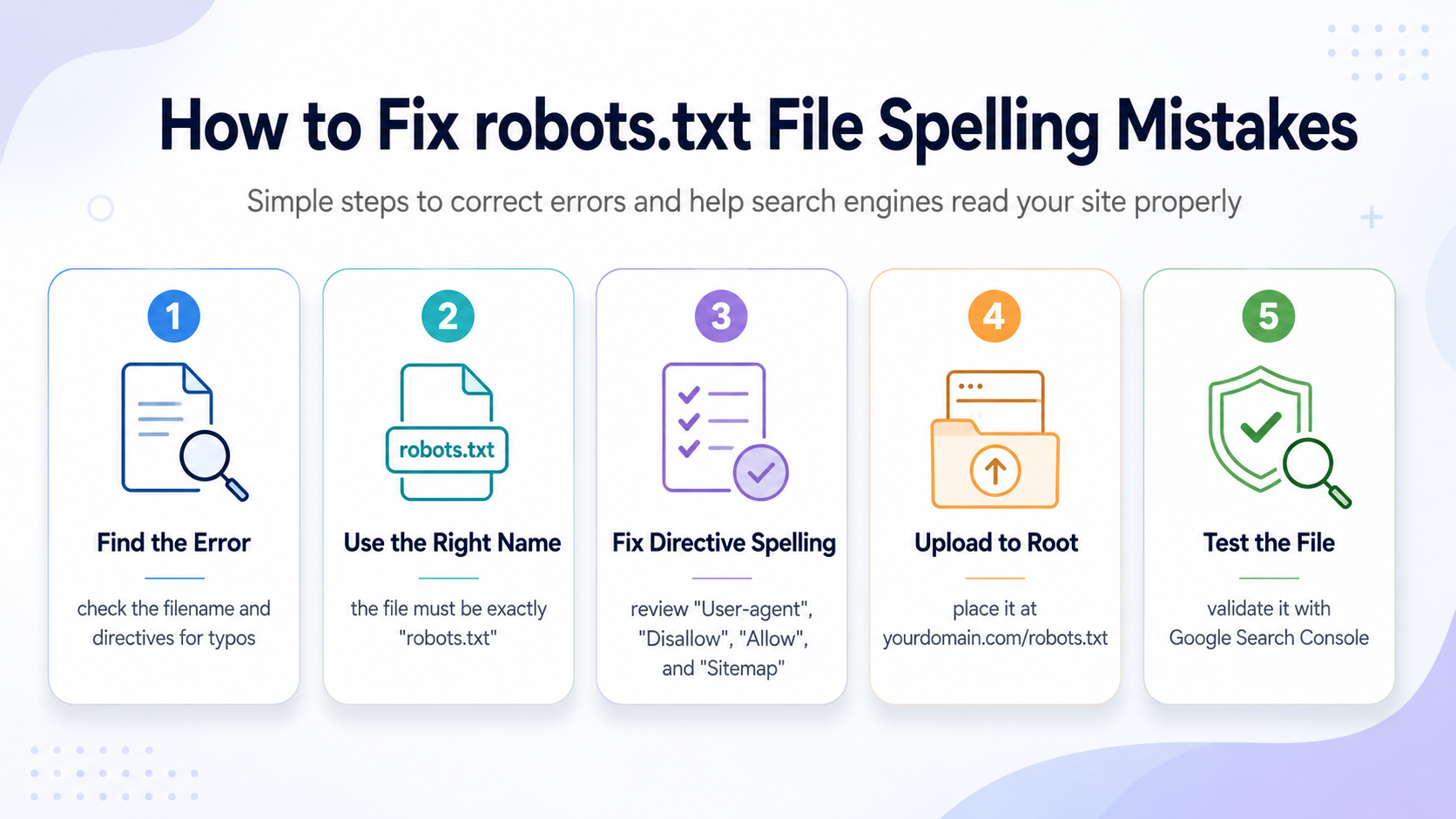
How to Fix Robots.txt Files Spellmistake
Fixing this issue is simple if you follow the right steps. First, open your robots.txt file and carefully review each line. Look for spelling errors or incorrect paths causing robots.txt files spellmistake problems.
Then validate the file using online tools before uploading it again.
Step-by-Step Fix Process
The process of fixing a robots.txt files spellmistake should always be done carefully and in order to avoid further SEO issues.
First, open your website’s robots.txt file in a text editor or through your hosting panel. Next, carefully check for spelling mistakes, missing slashes, or incorrect folder names. After that, correct all “Allow” and “Disallow” rules so they match your SEO intention.
Then use a testing tool like Google Search Console’s robots.txt tester to check if the file is working properly. This step helps you detect hidden errors before they affect indexing. Finally, re-upload the updated file to your server and confirm it is accessible by visiting yourdomain.com/robots.txt.
Following this process ensures your robots.txt files spellmistake is fully resolved and your website is properly optimized for search engines.
Best Practices for Robots.txt Optimization
A clean and properly structured robots.txt file improves crawl efficiency and overall SEO performance. It helps search engines quickly understand your website structure without confusion. The simpler your file is, the easier it becomes for bots to crawl important pages. Overly complex rules often lead to mistakes, including robots.txt files spellmistake issues that can harm indexing and visibility.
Keeping your robots.txt file optimized also reduces the risk of blocking valuable pages by accident. A well-maintained file ensures that search engines focus only on the content that matters most for rankings.
Expert SEO Tips
Do not block important pages because it can directly reduce your organic traffic and visibility. Always test your robots.txt file before publishing it to make sure there are no hidden errors or robots.txt files spellmistake problems. Keep the syntax clean, simple, and properly formatted so search engines can easily read it without confusion.
It is also important to update your robots.txt file whenever you make changes to your website structure. Avoid over-restricting bots because it may prevent indexing of useful pages and reduce your overall SEO performance. Following these tips helps maintain a healthy, search-friendly website.
Tools to Check Robots.txt Errors
Several tools help detect errors before they impact SEO performance. Google Search Console is the most reliable option for testing crawl rules.
Other SEO tools also highlight robots.txt files spellmistake issues instantly.
Recommended Tools List
Google Search Console
Screaming Frog SEO Spider
Ahrefs Site Audit
SEMrush Site Audit
Robots.txt Tester
Using these tools reduces the risk of hidden errors.
Robots.txt vs Sitemap – Understanding the Difference
Many beginners confuse robots.txt with sitemap.xml. Both serve different purposes in SEO strategy.
Robots.txt controls crawling rules, while sitemap helps search engines discover pages efficiently.
Key Differences Table
Feature | Robots.txt | Sitemap.xml |
Purpose | Crawl rules | Page listing |
Function | Block/allow bots | Guide indexing |
SEO Impact | High if wrong | High if missing |
A robots.txt files spellmistake affects crawling, while sitemap issues affect discovery.
Advanced SEO Insights for Robots.txt
Advanced users use robots.txt for crawl budget optimization. This helps search engines focus only on valuable pages.
However, overuse of rules can lead to robots.txt files spellmistake problems and indexing loss.
Smart Optimization Strategy
Focus only on:
Admin pages
Duplicate content
Search result pages
Temporary URLs
Avoid blocking important content pages. Balance is key.
Case Study – SEO Recovery After Fixing Robots.txt
A tech blog faced indexing issues due to a hidden robots.txt files spellmistake. The file blocked /articles/ directory accidentally.
After correction, Google re-crawled pages and restored rankings within one month.
Key Lesson
Small mistakes can cause big losses. Always audit your robots.txt file regularly to prevent SEO damage.
Conclusion
The robots.txt files spellmistake issue may look small, but it has a major impact on SEO performance. Proper configuration ensures search engines can access and index your content correctly. Regular audits, testing, and updates keep your website healthy and ranking well. Fixing robots.txt files spellmistake is one of the simplest yet most powerful SEO improvements. It protects your website from hidden indexing issues and improves visibility on Google. Always check your file before publishing updates. A clean robots.txt means better crawling, stronger SEO, and higher rankings. If you manage a website, make robots.txt auditing a regular habit. Small fixes today can bring long-term SEO success.
FAQ: Robots.txt File
1. How to generate a robots.txt file?
You can generate a robots.txt file by creating a simple text file using Notepad or any editor and naming it “robots.txt.” Inside it, you write instructions for search engines about which pages they can or cannot crawl. After saving the file, you upload it to the main folder of your website so search engines can find it easily.
2. Is robots.txt a legal thing?
No, robots.txt is not a legal document. It is only a technical file used to guide search engine bots. It works as a set of instructions based on trust, not law. Search engines usually follow it, but it is not legally enforced, so it cannot be used as a legal rule or protection.
3. Is robots.txt still useful?
Yes, robots.txt is still very useful for modern websites. It helps search engines understand which pages to crawl and which to ignore. This improves SEO, saves crawl budget, and prevents unnecessary pages from appearing in search results. It is still an important part of website optimization today.
4. Is robots.txt a vulnerability?
Robots.txt is not a security vulnerability by itself, but it can create risks if used carelessly. It may expose sensitive folder names or website structure, which attackers can see. However, it does not protect files, so private data should always be secured with proper authentication instead of relying on robots.txt.
Written by

Alex
Creative blogger sharing insights, stories, and fresh ideas.