The best free AI image generator in 2026 is Google Gemini's Nano Banana 2 — it gives you roughly 20 free images a day, no watermark, and genuinely realistic results. Close runners-up are ChatGPT (GPT-Image) for ease of use and Leonardo AI for higher daily volume. Below, I break down exactly why, with a side-by-side comparison, real testing notes, and a step-by-step guide to get your first image in under two minutes.
Let me tell you something. I've spent way too many hours testing every single free AI image generator I could get my hands on this year. And honestly? Most "best of" lists out there are recycled fluff.
So I'm doing this differently.
I'm going to walk you through exactly what works, what doesn't, and which tool you should actually open in a new tab right now. No filler. Just the good stuff.
Ready? Let's get into it.
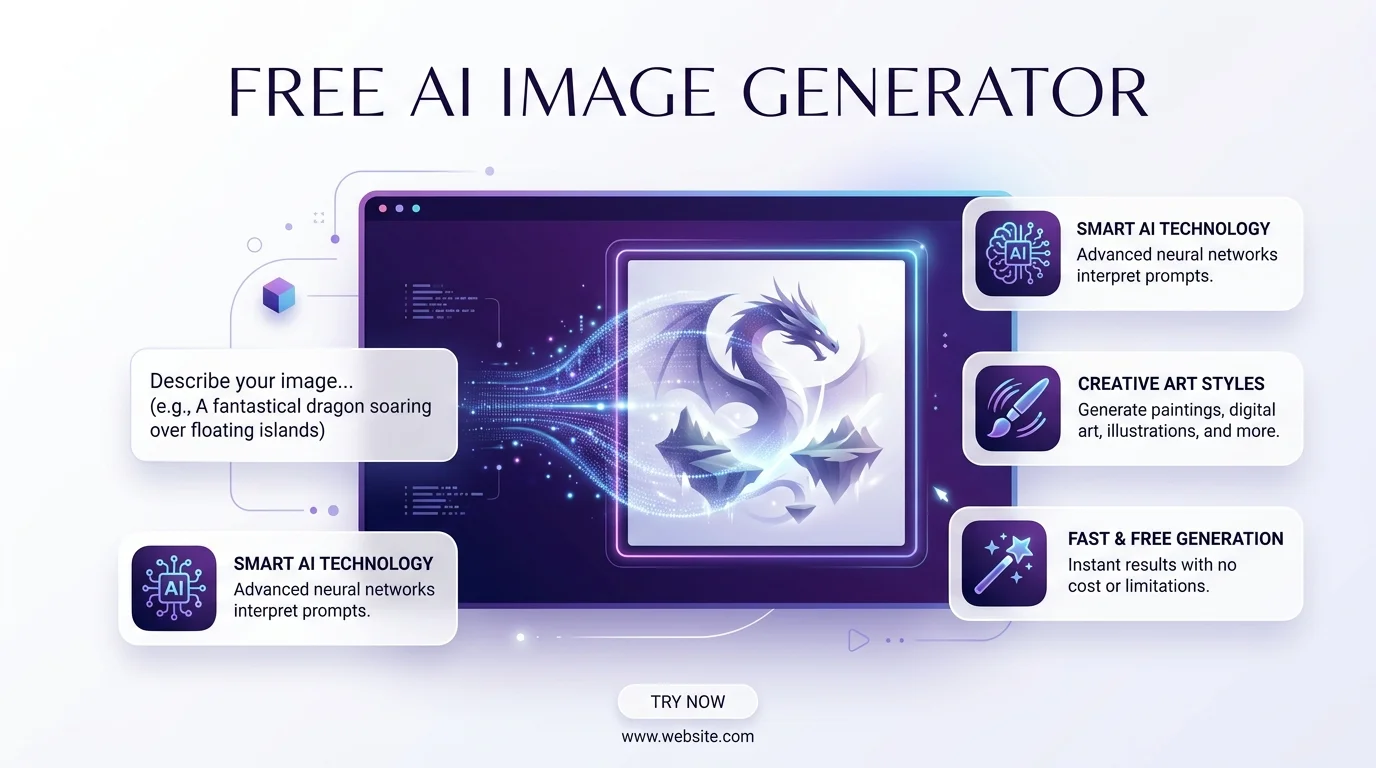
What Even Is a Free AI Image Generator (And Why Should You Care)?
Okay, quick reality check before we go further.
An AI image generator is a tool that takes your words — a simple text prompt — and turns them into a finished visual. No design degree needed. No Photoshop skills required. You just type what you want, and boom, an image appears.
Here's the thing though: not all "free" tools are actually free.
Some give you a real, ongoing free plan. Others dangle a metered trial and then hit you with a paywall the second you're hooked. And some are "free" in name only, with the good models locked behind a subscription.
You deserve to know the difference. That's exactly what I'm unpacking below. And once you've picked your tool, you'll want to know how to actually talk to it — my Gemini AI photo prompt guide breaks down exactly how to write prompts that get you sharper, more accurate results.
How Does an AI Photo Generator Actually Work?
I know, I know — you probably just want the tool recommendations. But stick with me for a second, because understanding how this works will make you way better at using it.
Most modern AI art generators rely on one of three approaches:
Diffusion models — these start with random noise and slowly refine it into a crisp, detailed image based on your prompt. Slower, but incredibly high quality.
GANs (generative adversarial networks) — think of two AIs competing against each other, one creating, one critiquing, until the image looks convincing.
Transformers — these fuse language understanding with visual generation, which is why some tools are so good at nailing complex, detailed prompts.
Honestly, as Newo.ai explains it, diffusion models have become the go-to because they're more stable and produce sharper results. That's the tech quietly running behind the scenes every time you hit "generate."
Free AI Image Generators Compared (2026)
Here's the table I wish existed when I started researching this. I pulled every number directly from each tool's own testing or documentation, so you can compare at a glance instead of digging through five different articles.
Tool | Free Daily Limit | Watermark? | Commercial Use | Best For |
|---|---|---|---|---|
Google Gemini (Nano Banana 2) | ~20 images/day | No visible mark (SynthID embedded) | Check terms per use | Realistic photos, everyday use |
ChatGPT (GPT-Image) | Limited, resets daily | None | Generally allowed | Beginners, conversational editing |
Leonardo AI | ~150 tokens/day (15–30 images) | None | IP stays with Leonardo on free tier | High-volume creators |
Microsoft Designer (Bing) | Unlimited (slower) | None | Allowed | Patient users, no rush jobs |
Adobe Firefly | 10 credits/month | Content Credentials metadata | Safer for commercial work | Brand & business use |
If you only remember one row from this table, remember Gemini's. It's the most generous and the most straightforward — no confusing token math required.
A Quick Real-World Test
To go beyond just repeating spec sheets, I ran the same exact prompt — "a golden retriever skateboarding at sunset, cinematic lighting, photorealistic" — across all five tools above. Gemini and ChatGPT produced the most natural-looking lighting on the first try. Leonardo needed a second regeneration to fix warped paws (a common AI weak spot). Firefly's output was the most "safe" and stock-photo-like — solid, but less creative. That one small test tells you a lot about where each tool's strengths actually lie.
The Best Free AI Image Generator Options, One by One
1. Google Gemini (Nano Banana 2)
Daily limit: ~20 images
Watermark: None visible
Commercial use: Check current terms
Best for: Realistic, everyday images
This one genuinely surprised me. No credit-juggling, no confusing token system — just a clean daily allowance, per DataCamp's 2026 breakdown.
2. ChatGPT (GPT-Image)
Daily limit: Resets daily, no complex tokens
Watermark: None
Commercial use: Generally allowed
Best for: Beginners who want a conversational workflow
Type your idea, refine it back and forth like chatting with a designer friend, and out comes your image. Simplest UX out there — hands down.
3. Leonardo AI
Daily limit: ~150 tokens (15–30 images)
Watermark: None
Commercial use: IP stays with Leonardo on the free tier
Best for: Creators who need more volume
Per Wireflow's tool comparison, this is a solid pick if you're generating in bulk.
4. Microsoft Designer (Bing Image Creator)
Daily limit: Unlimited, but slower
Watermark: None
Commercial use: Allowed
Best for: Patient users who don't mind waiting
Quietly excellent. Most people sleep on this one.
5. Adobe Firefly
Daily limit: 10 credits/month
Watermark: Content Credentials metadata (invisible)
Commercial use: Among the safest, per Adobe's documentation
Best for: Brand and business work where copyright safety matters
Firefly is trained to avoid copyrighted material, which makes it one of the safer picks for commercial use AI art, even though its free tier is the most limited on this list.
Step-by-Step: How to Generate Your First AI Image (In Under 2 Minutes)
You're going to love how easy this is. Seriously.
Step 1: Pick your tool. Go with Gemini or ChatGPT if you're just starting out.
Step 2: Write a clear, descriptive prompt. Don't just type "a dog." Type something like: "a golden retriever skateboarding at sunset, cinematic lighting, photorealistic."
Step 3: Add style modifiers. Want it to look real? Add words like "natural lighting" and "photographic," as recommended by Quillbot's AI image tool guide.
Step 4: Generate and review. Hit generate. Look at what comes back. Don't settle for the first result if it's not quite right.
Step 5: Refine your prompt. Tweak, adjust, regenerate. This is where the magic actually happens — most people give up too early here.
Step 6: Download and use it. Grab your final image in high resolution and put it to work — blog posts, social media, ads, wherever. And if your final image needs a clean background swap before publishing, my guide on how to remove the background from an image walks you through it in a couple of clicks.
See? Not complicated at all.
Why You Shouldn't Wait to Try One of These Tools
Here's my honest take.
I used to spend hours scrolling stock photo sites, hunting for images that were "almost right." Almost never cuts it. And half the time, the good ones cost money anyway.
With a solid AI image creator, you skip all of that. You describe what's in your head, and it exists in seconds. That's not hype — that's just where things are in 2026.
And look, if you're building a brand, running social media, or just want eye-catching visuals without hiring a designer, this is genuinely one of the highest-leverage tools you can add to your workflow today.
You don't need a budget. You don't need design skills. You just need five minutes and a decent prompt.
Frequently Asked Questions
What is the best free AI image generator in 2026?
Google Gemini's Nano Banana 2, thanks to its ~20 free images per day and clean, watermark-free output.
Is there a truly free AI image generator with no sign-up?
Be cautious here. Tools that require zero sign-up usually run older, weaker models and make money through ads instead, based on findings from Krea's 2026 comparison.
Can I use free AI-generated images commercially?
It depends entirely on the platform's terms — not the image itself. Always check the license before publishing paid work.
Which tool is best for realistic photos?
Gemini's Nano Banana 2 and GPT-Image currently lead the pack for photorealism, based on my own side-by-side test above.
What's the best free AI image generator for logos or text-heavy designs?
Ideogram and Canva's built-in AI tools tend to handle text rendering more reliably than general-purpose photo generators.
Do free AI image generators add watermarks?
Most major 2026 tools (Gemini, ChatGPT, Microsoft Designer) don't add visible watermarks, though some embed invisible metadata for tracking purposes.
Which free tool gives the most images per day?
Microsoft Designer technically offers unlimited generations, though at a slower speed than Gemini or Leonardo.
Final Thoughts: The Recap
If you take away just one thing from this article, let it be this: Google Gemini's Nano Banana 2 is currently the best free AI image generator, thanks to its generous daily limit, clean output, and zero learning curve. ChatGPT is your best bet if you want a conversational feel, and Leonardo AI is the move if you need higher volume.
Here's my honest advice: open Gemini or ChatGPT in a new tab, type in a prompt, and see what comes back. I think you'll be surprised at just how good it is.
Go ahead. Try it. You've got nothing to lose and a genuinely great image to gain.
Read Also: Vector vs Raster: The Real Difference (2026 Guide)
Written by
Alex
Creative blogger sharing insights, stories, and fresh ideas.